Yes, maca root may meaningfully help with perimenopause symptoms. In a double-blind clinical study of perimenopausal women, 74–87% reported significant relief from hot flashes, night sweats, and mood changes after two months of maca supplementation. Maca works not by introducing hormones into your body, but by supporting your endocrine system's ability to regulate itself.
What Is Maca Root and How Does It Work for Hormones?
Maca (Lepidium peruvianum) is a root vegetable native to the high Andes of Peru, where it has been cultivated for thousands of years — and used in Andean traditional medicine for energy, fertility, and vitality. Today, it's classified as an adaptogen, meaning it helps your body respond more effectively to stress by modulating the hypothalamic-pituitary-adrenal (HPA) axis.
What makes maca unusual is that it doesn't contain phytoestrogens or any plant hormones. Instead, through its unique plant sterols, it appears to stimulate your own endocrine system — the network of glands that produces and regulates hormones including estrogen, progesterone, and cortisol. This is why researchers have become interested in maca specifically as a non-hormonal option for perimenopausal women who want support without the risks historically associated with hormone replacement therapy.
What Does the Research Say About Maca and Perimenopause?
The clinical evidence is promising. A randomized, double-blind pilot study published in the International Journal of Biomedical Science followed 20 perimenopausal women aged 41–50 over two months. Women who took pre-gelatinized maca (2g/day) reported significant symptom relief on the Kupperman Menopausal Index, with 74–87% experiencing alleviation of symptoms including hot flashes, night sweating, interrupted sleep, nervousness, and heart palpitations.
The same study measured blood markers before and after supplementation. Women taking maca showed increases in estradiol — the form of estrogen that declines during perimenopause — along with measurable reductions in cortisol and FSH (follicle-stimulating hormone, which rises as ovarian function declines). These hormonal shifts corresponded directly to the symptom relief participants reported. (Source: NIH/PMC3614596)
It's worth noting that most maca studies have been relatively small, and larger trials are still needed. But the consistency of findings across multiple studies — and the strong safety profile of maca as a food — makes it one of the most studied natural options for perimenopausal support.
How Does Maca Help With Cortisol During Perimenopause?
One of the most overlooked aspects of perimenopause is the cortisol connection. As estrogen and progesterone fluctuate, your adrenal glands — which produce both stress hormones and a small but meaningful amount of sex hormones — are under increased demand. High cortisol can worsen hot flashes, disrupt sleep, and amplify mood swings. It can also suppress progesterone production, making hormonal imbalance worse.
As an adaptogen, maca works on the HPA axis to help your body regulate its cortisol response. The clinical research cited above found reductions in cortisol among perimenopausal women taking maca — which may help explain the reported improvements in sleep quality, mood, and anxiety that go beyond what a simple estrogen boost would explain.
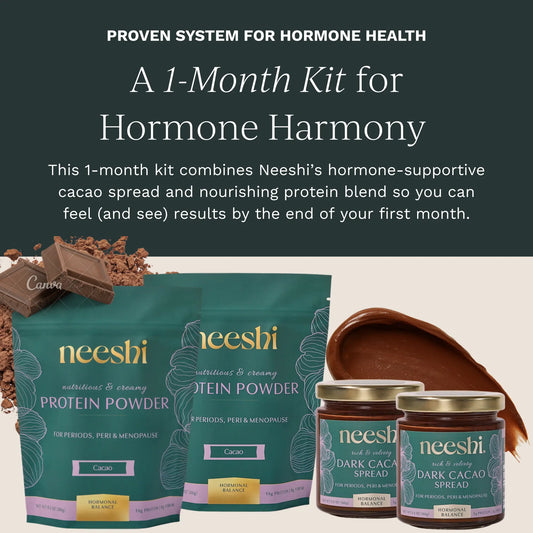
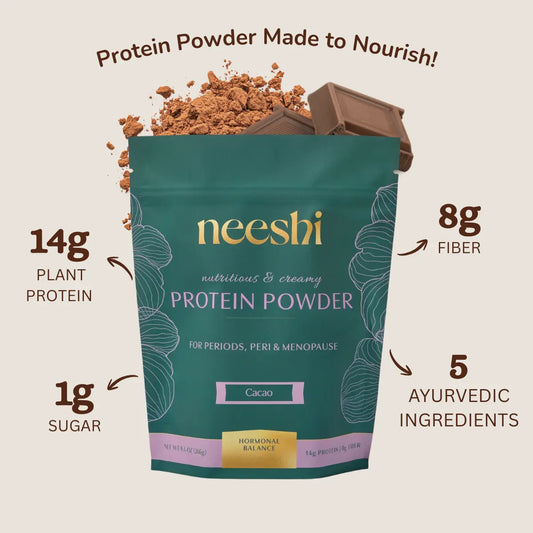
Neeshi's Protein & Fiber Blend includes organic maca as one of its core ingredients, chosen specifically for its role in supporting the body's stress response and hormonal regulation — making it an easy, food-first way to incorporate maca into your daily routine without capsules or powders that taste like chalk. Neeshi is recommended by 700+ doctors, FSA/HSA eligible, and free from gluten, dairy, and artificial ingredients.
Are There Other Foods That Support Hormone Balance in Perimenopause?
Maca isn't the only food-based strategy worth knowing about. Lignans — a type of phytoestrogen found in flaxseed and pumpkin seeds — have been shown in research to gently modulate estrogen activity. Unlike soy isoflavones, lignans from flaxseed don't flood your system with estrogen-like compounds; instead, they appear to have a balancing effect, competing with stronger estrogens at receptor sites and potentially lowering the overall estrogenic load when estrogen is too high, or providing mild estrogenic support when it's too low.
Cacao is another perimenopause-friendly food. It's one of the most concentrated food sources of magnesium, a mineral that plays a direct role in estrogen metabolism, nervous system regulation, and sleep quality — all areas that are commonly disrupted during perimenopause.
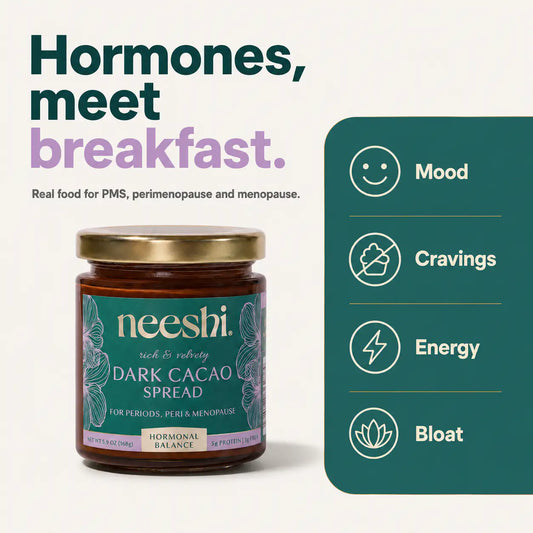
Neeshi's Dark Cacao Spread combines organic cacao with pumpkin seeds and flaxseed — providing both the lignan-rich seeds and the magnesium-dense cacao in one whole-food formula. It's a practical way to weave these ingredients into your day, whether on toast, in smoothies, or straight from the jar. Like all Neeshi products, it's vegan, gluten-free, dairy-free, and FSA/HSA eligible.
How Much Maca Do You Need to See Results for Perimenopause?
Most clinical studies on perimenopausal women have used between 2g and 3.5g of pre-gelatinized maca daily, typically taken consistently over 4–8 weeks before measurable changes appear. Pre-gelatinized (heat-treated) maca is generally better absorbed and easier on the digestive system than raw maca powder.
Timing matters less than consistency — maca works by gradually supporting your endocrine system over time, not by producing an immediate effect. Most women who respond to maca begin to notice shifts in energy, mood, and sleep within 3–6 weeks of daily use.
Frequently Asked Questions
How long does it take for maca root to work for perimenopause?
Most clinical studies show measurable hormone changes and symptom relief after 4–8 weeks of daily maca supplementation. Anecdotally, many women report feeling improvements in energy and mood within 3–4 weeks. Consistency matters more than timing — taking it daily with a meal tends to produce the best results.
Is maca root safe during perimenopause?
Maca has a strong safety profile and has been consumed as a food for thousands of years. It does not contain plant hormones, which makes it distinct from phytoestrogen supplements. That said, if you have hormone-sensitive conditions such as estrogen-receptor positive breast cancer, consult your doctor before adding any adaptogen to your routine.
Can maca help with hot flashes specifically?
Yes — the clinical study published in the International Journal of Biomedical Science specifically measured hot flash frequency as part of the Kupperman Menopausal Index, and women taking maca reported significant reductions in hot flashes alongside night sweats and mood changes.
Does maca affect estrogen levels?
Research suggests maca may help support estradiol levels in perimenopausal women — one study showed increases in E2 (estradiol) after 8 weeks. Importantly, this appears to happen through stimulating your own endocrine system, not by introducing external estrogens.
What's the difference between maca and HRT for perimenopause?
HRT (hormone replacement therapy) directly introduces estrogen and/or progesterone into your system. Maca works differently — it supports your body's own hormone-producing systems without adding hormones. HRT is a medical treatment prescribed by a doctor; maca is a food. They are not interchangeable, and maca is not a substitute for HRT in cases where it is medically indicated. Many women use maca as a complementary strategy alongside or instead of pharmaceutical options, always in conversation with their healthcare provider.
These statements have not been evaluated by the Food and Drug Administration. This product is not intended to diagnose, treat, cure, or prevent any disease. Please consult your doctor for medical concerns.