
Foods for Painful Periods & Menstrual Cramps
What you eat in the days before and during your period can meaningfully reduce cramp severity. Here's what the evidence says — and which ingredients make the biggest difference.
Why do some women have more painful periods?
Menstrual cramps (dysmenorrhea) are caused by prostaglandins — hormone-like compounds that trigger the uterine muscle contractions needed to shed the lining. Higher prostaglandin levels mean stronger, more painful contractions. Diet affects prostaglandin production: inflammatory foods raise them, anti-inflammatory foods lower them.
Magnesium deficiency is also common in women with painful periods. Magnesium is a natural muscle relaxant, and low levels mean the uterus contracts harder and for longer.
The best foods for menstrual cramps
- Dark cacao (70%+ cacao) — one of the richest food sources of magnesium. Also contains theobromine, a mild mood-lifter, and antioxidants that reduce inflammation.
- Pumpkin seeds — high in both magnesium and zinc. Zinc helps regulate prostaglandin production and supports progesterone in the luteal phase.
- Flaxseed — contains lignans (plant-based compounds that support estrogen metabolism) and alpha-linolenic acid (ALA), an anti-inflammatory omega-3 fatty acid.
- Almonds — a source of vitamin E and magnesium. Vitamin E has been shown in studies to reduce period pain when taken consistently in the luteal phase.
- Leafy greens (spinach, kale) — high in magnesium and calcium, both of which help reduce uterine muscle tension.
- Fatty fish (salmon, sardines, mackerel) — high in omega-3s that directly inhibit prostaglandin synthesis.
- Ginger — has anti-prostaglandin activity similar to mild NSAIDs in studies. Effective when consumed consistently before and during your period.
- Turmeric — curcumin reduces inflammatory cytokines that worsen period pain.
Foods to reduce or avoid during your period
- Refined sugar and processed carbs — spike insulin and promote systemic inflammation, increasing prostaglandin activity
- Trans fats and fried foods — directly increase pro-inflammatory prostaglandins
- Excess caffeine — constricts blood vessels and can intensify pelvic cramping
- Alcohol — disrupts liver's ability to metabolize excess estrogens, worsening hormonal imbalance
- High-sodium processed foods — cause water retention and bloating that compounds pelvic discomfort
When to start: Anti-inflammatory dietary changes work best when sustained through your whole cycle — not just during your period. The foods you eat in the 10–14 days before your period (the luteal phase) have the biggest effect on how painful that period is.
How long before dietary changes help?
Most women notice a meaningful shift after 1–3 full menstrual cycles of consistent changes. Hormonal balance and inflammation markers take time to shift. One tablespoon of Neeshi Dark Cacao Spread daily, taken consistently, provides magnesium from cacao, zinc from pumpkin seeds, and lignans from flaxseed — a combination specifically designed for this purpose.
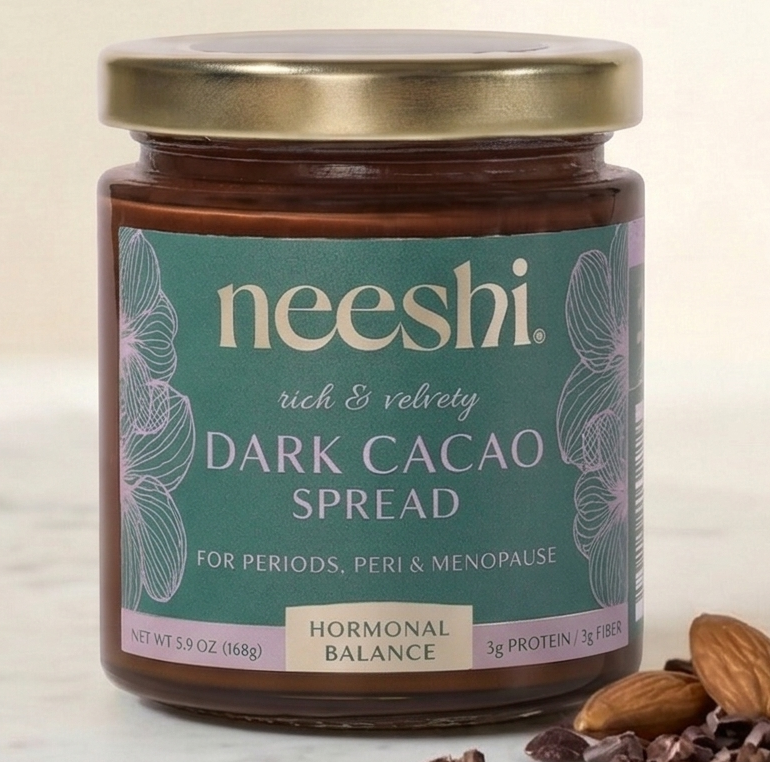
Neeshi Dark Cacao Spread
One tablespoon daily. Organic cacao + pumpkin seeds + flaxseed + almonds — the magnesium-rich, anti-inflammatory combination that helps ease period pain. Nearly all women in consumer survey reported less severe cramps after 3 cycles. Recommended by 700+ doctors.
Frequently Asked Questions
What foods help with menstrual cramps?
Foods high in magnesium (dark cacao, pumpkin seeds, leafy greens), anti-inflammatory omega-3s (flaxseed, fatty fish, walnuts), zinc (pumpkin seeds), and vitamin E (almonds) have the strongest evidence for reducing menstrual cramp severity. These nutrients work by relaxing uterine muscle and reducing prostaglandin production.
Why does magnesium help with period cramps?
Magnesium is a natural muscle relaxant that helps inhibit prostaglandin production and reduce the intensity of uterine contractions. It also supports the nervous system's pain response. Many women with painful periods are magnesium-deficient. Dark cacao and pumpkin seeds are among the richest dietary sources.
Does dark chocolate really help with cramps?
Dark chocolate with 70%+ cacao content is genuinely one of the best foods for period cramps — it's high in magnesium, contains anti-inflammatory antioxidants, and has theobromine for mild mood support. The key is high cacao content. Standard milk chocolate has too much sugar and too little cacao to provide meaningful benefit.
How long does it take for food changes to reduce period pain?
Most women feel a meaningful difference after 1–3 full menstrual cycles of consistent dietary changes. In Neeshi's consumer survey, nearly all women who used the Dark Cacao Spread daily for 3 cycles reported less severe cramps. Results build over time as inflammation decreases and hormonal balance improves.
Can diet alone replace pain medication for cramps?
For mild to moderate cramps, many women find dietary and nutritional changes reduce their need for pain medication. For severe cramps (especially if you have endometriosis or fibroids), consult a healthcare provider — diet is a powerful complement to medical care, not a replacement. Neeshi is a food, not a medicine.
Is Neeshi FSA or HSA eligible?
Yes. Neeshi Dark Cacao Spread is FSA/HSA eligible when purchased for menstrual or hormonal health support.
These statements have not been evaluated by the Food and Drug Administration. This product is not intended to diagnose, treat, cure, or prevent any disease. Consumer survey data is from 18 women who used Neeshi daily for 3 full menstrual cycles. Results are self-reported and not from a clinical trial.