
Foods That Help With PMS Mood Swings
The irritability, emotional sensitivity, and mood shifts that hit before your period aren't in your head — they're hormonal. And what you eat in the week before your period can meaningfully change how intense they are.
Why do mood swings happen before your period?
In the second half of your cycle (the luteal phase, roughly days 14–28), estrogen rises and then drops sharply while progesterone increases. These hormonal shifts directly affect serotonin and GABA levels in the brain — the two neurotransmitters most responsible for mood stability, emotional regulation, and feelings of calm.
When serotonin drops in response to falling estrogen, the result is what most women recognize as PMS: irritability, emotional sensitivity, anxiety, low mood, or feeling "on edge" for no clear reason. The severity varies significantly between women — and diet is one of the biggest factors that determines how vulnerable your brain chemistry is to these hormonal swings.
The serotonin-magnesium connection
Magnesium is a required cofactor in serotonin synthesis. Without adequate magnesium, your brain can't make enough serotonin to buffer the hormonal fluctuations of the luteal phase. Studies show that women with PMS have significantly lower magnesium levels than women without PMS — and magnesium supplementation consistently reduces PMS mood symptoms in clinical trials.
The good news: magnesium is available from food. Dark cacao, pumpkin seeds, leafy greens, almonds, and legumes are all excellent sources. Eating these regularly throughout your cycle — not just in the week before your period — builds the reserves your brain needs.
Best foods for PMS mood support
- Dark cacao (70%+ cacao) — high in magnesium for serotonin production; contains theobromine (a mild, natural mood lifter) and phenylethylamine (associated with feelings of wellbeing)
- Pumpkin seeds — one of the richest sources of both magnesium and zinc; zinc supports dopamine regulation and progesterone production
- Flaxseed — lignans support estrogen metabolism, smoothing the hormonal fluctuations that drive mood shifts
- Bananas — contain B6 (required for serotonin synthesis) and tryptophan (serotonin precursor)
- Walnuts and fatty fish — omega-3 fatty acids reduce neuroinflammation and support serotonin receptor sensitivity
- Complex carbohydrates (oats, sweet potato, brown rice) — support serotonin uptake in the brain; cravings for carbs before your period are your brain asking for serotonin support
- Leafy greens (spinach, kale) — magnesium, folate (supports methylation of serotonin pathways), and iron
- Almonds — vitamin E and magnesium; also slow-release energy to prevent blood sugar crashes that worsen irritability
About those carb cravings: The intense carbohydrate cravings many women experience before their period are a real physiological signal. Your brain is trying to increase serotonin production. Satisfying them with whole food complex carbs (sweet potato, oats, legumes) — rather than refined sugar — supports serotonin without the crash that worsens mood.
Foods that make PMS mood symptoms worse
- Refined sugar — short-term mood boost followed by blood sugar crash, worsening irritability and anxiety
- Alcohol — suppresses serotonin production, disrupts sleep (which amplifies mood vulnerability), and impairs liver's estrogen clearance
- Excess caffeine — raises cortisol, depletes B vitamins needed for neurotransmitter production, worsens anxiety and sleep disruption
- Processed and ultra-processed foods — promote systemic inflammation that affects brain chemistry and mood
- Skipping meals — blood sugar drops rapidly worsen PMS irritability and emotional reactivity
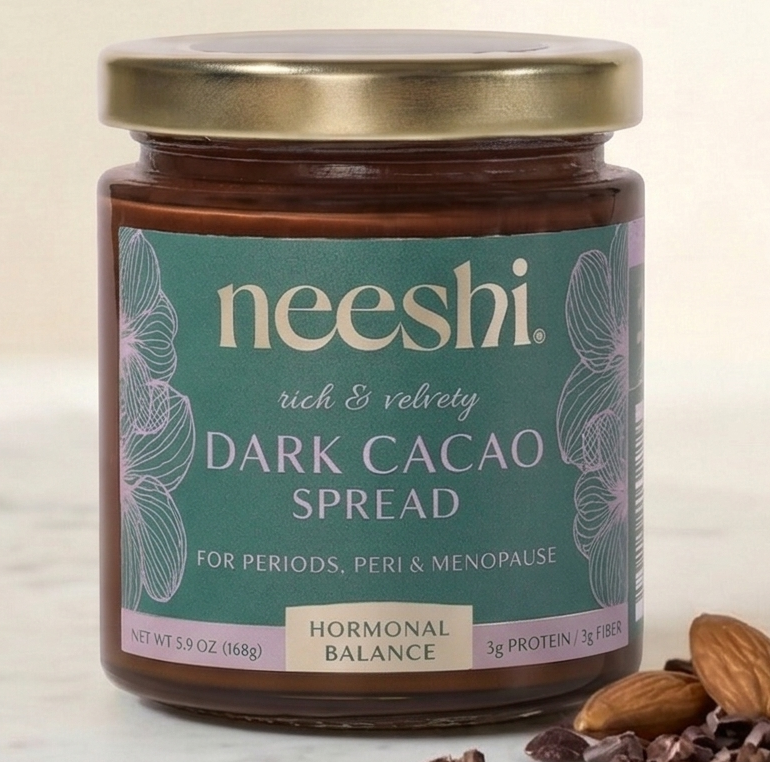
Neeshi Dark Cacao Spread
Organic cacao + pumpkin seeds for magnesium and zinc, flaxseed for estrogen balance — a daily combination for hormonal mood support. 9 in 10 women in consumer survey reported fewer mood swings after 3 cycles. One tablespoon daily. Recommended by 700+ doctors.
Frequently Asked Questions
What causes PMS mood swings?
The hormonal fluctuations of the luteal phase — rising then falling estrogen, rising progesterone — affect serotonin and GABA levels in the brain. Women with lower magnesium, B6, and omega-3 levels are more vulnerable to these fluctuations. Diet directly affects how resilient your brain chemistry is to these hormonal shifts.
Does magnesium really help with PMS?
Yes — this is one of the most consistent findings in PMS research. Multiple randomized controlled trials show magnesium supplementation reduces PMS mood symptoms including irritability, anxiety, and depressed mood. Women with PMS tend to have lower magnesium levels than those without. Dark cacao and pumpkin seeds are among the richest dietary sources.
Why do I crave chocolate and carbs before my period?
These cravings are your brain requesting help with serotonin production. Your body needs carbohydrates to help tryptophan cross the blood-brain barrier (where it becomes serotonin), and it craves dark chocolate specifically because it's rich in magnesium — a serotonin cofactor. The craving is physiologically real. Satisfying it with dark cacao and whole food carbs (rather than sugary snacks) gives your brain what it's actually asking for.
Is PMDD different from PMS mood swings?
Yes. PMDD (Premenstrual Dysphoric Disorder) involves severe mood symptoms — including severe depression, anxiety, or rage — that significantly impair daily functioning. It's distinct from PMS and is considered a medical condition requiring treatment. If your mood symptoms before your period are severe, please see a doctor or psychiatrist. Dietary support can complement treatment but should not replace it for PMDD.
How long does it take for dietary changes to help PMS mood?
Most women notice a meaningful shift in PMS mood symptoms after 1–3 full menstrual cycles of consistent dietary changes. Building magnesium reserves and improving hormonal balance happens gradually — daily consistency through the whole cycle matters more than targeted "period week" eating.
These statements have not been evaluated by the Food and Drug Administration. This product is not intended to diagnose, treat, cure, or prevent any disease. Consumer survey data is from 18 women who used Neeshi daily for 3 full menstrual cycles. Results are self-reported and not from a clinical trial. If you experience severe PMS or PMDD symptoms, please consult a healthcare provider.