
Nutrition for Perimenopause Hot Flashes
Hot flashes are one of the most disruptive symptoms of perimenopause — but what you eat every day can meaningfully reduce their frequency and intensity. Here's what the research shows.
Why do hot flashes happen?
During perimenopause, estrogen levels decline and fluctuate erratically. This disrupts the hypothalamus — the part of the brain that regulates body temperature. When estrogen signaling becomes unstable, the hypothalamus becomes hypersensitive to even small temperature changes, triggering the body's cooling response: blood vessels dilate, you sweat, and you feel that wave of heat even when the room temperature is perfectly comfortable.
Hot flashes can happen dozens of times per day for some women, and when they occur at night, they become night sweats that fragment sleep. The transition can last months to years.
How food can help reduce hot flashes
Certain plant compounds — especially phytoestrogens — can help stabilize estrogen activity during the perimenopausal transition. Phytoestrogens bind to estrogen receptors and have a weak estrogen-like effect, which can help smooth out the dramatic fluctuations that trigger hot flashes. They don't replace estrogen — they help modulate the body's response to lower and fluctuating estrogen levels.
The most studied and safest source is flaxseed lignans — whole food-derived, low potency, and backed by multiple clinical studies showing reduced hot flash frequency with consistent daily intake.
Best foods for hot flash relief
- Flaxseed (ground) — the most evidence-backed phytoestrogen food for hot flash reduction. Lignans are converted by gut bacteria into enterolignans with mild estrogen-modulating activity. Studies show consistent flaxseed consumption can reduce hot flash frequency significantly.
- Organic soy (edamame, tempeh, miso) — contains isoflavones, the best-studied phytoestrogens for hot flash relief. Most effective in women who have the gut bacteria to convert them (roughly 30–50% of Western women).
- Pumpkin seeds — rich in zinc, which supports hormonal regulation and progesterone production.
- Dark cacao — magnesium supports the nervous system and helps with the thermoregulatory responses triggered by hot flashes.
- Almonds and walnuts — healthy fats support hormonal synthesis and reduce systemic inflammation.
- Leafy greens (spinach, kale, arugula) — high in magnesium, calcium, and folate that support hormonal balance.
- Sage — a traditional European remedy for hot flashes with some clinical evidence for reducing frequency.
Foods and habits that worsen hot flashes
- Alcohol — a well-documented hot flash trigger, especially red wine
- Caffeine — can trigger or intensify hot flashes, particularly in sensitive women
- Spicy foods — activate the same heat-sensing pathways the hypothalamus is hypersensitive to
- Refined sugar and high-glycemic carbs — blood sugar spikes can trigger hot flashes and worsen sleep disruption
- Hot beverages — even warming the body slightly can trigger the hypersensitive thermostat response
Gut health matters: Phytoestrogens from flaxseed and soy are activated by specific gut bacteria. Supporting your gut microbiome with fiber, fermented foods, and reducing antibiotics and processed food helps maximize the benefit of phytoestrogen-rich foods.
What about hormone therapy?
Menopausal hormone therapy (MHT/HRT) is the most effective medical treatment for hot flashes. Dietary approaches are a meaningful complement — for women who prefer to start with lifestyle, have contraindications to hormones, or want to reduce their HRT dose. Neeshi is a food, not a medicine, and should not replace medical treatment when your doctor recommends it.
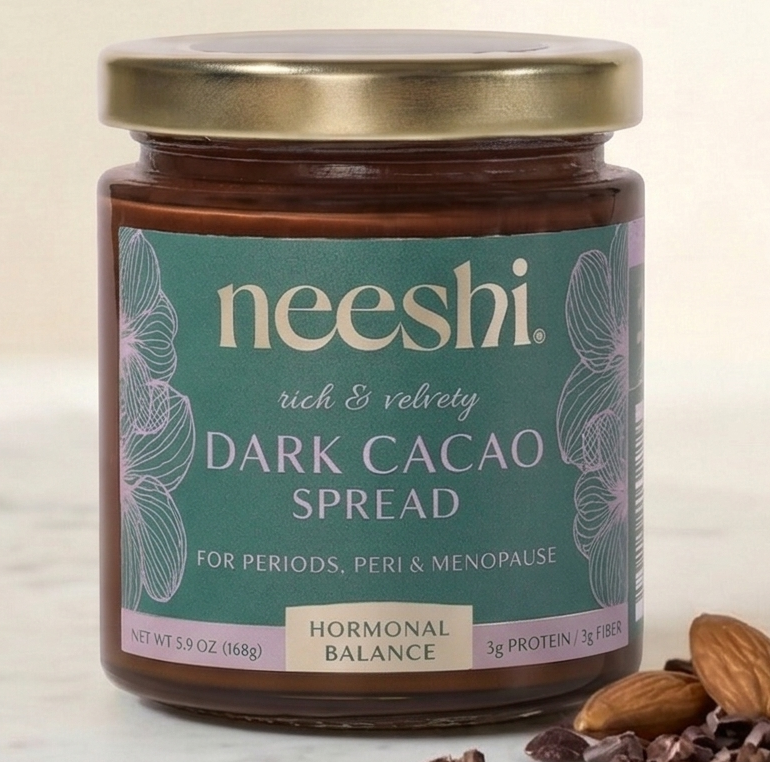
Neeshi Dark Cacao Spread
Contains organic flaxseed (phytoestrogens for hot flash support), pumpkin seeds, and cacao — daily nutritional support for perimenopause. Recommended by 700+ doctors. One tablespoon a day. FSA/HSA eligible, vegan, gluten-free.
Frequently Asked Questions
What foods help with hot flashes during perimenopause?
The best-studied foods for hot flash relief are those rich in phytoestrogens: ground flaxseed (lignans), organic soy (isoflavones), and sesame seeds. Other helpful foods include magnesium-rich foods (dark cacao, leafy greens), anti-inflammatory ingredients, and foods that support gut health (which activates phytoestrogens).
How long does it take for flaxseed to help with hot flashes?
Most studies show meaningful reduction in hot flash frequency after 6–12 weeks of daily flaxseed consumption. Consistency is more important than quantity — one tablespoon of ground flaxseed daily, every day, is more effective than occasional larger amounts.
Are phytoestrogens in food safe?
Whole food phytoestrogens from flaxseed and organic soy are generally considered safe for most women, including those concerned about hormone-sensitive conditions. They are much weaker than pharmaceutical estrogens. Women with a history of hormone-receptor-positive breast cancer should consult their oncologist before using phytoestrogen-rich foods therapeutically.
What triggers hot flashes I should avoid?
The most common dietary triggers are alcohol (especially red wine), caffeine, spicy foods, hot beverages, and refined sugar. Non-dietary triggers include stress, hot environments, tight clothing, and smoking. Keeping a symptom journal for 2–3 weeks can help identify your personal triggers.
Can diet replace hormone therapy for hot flashes?
Diet is most effective as a complement to, not a substitute for, medical treatment when hot flashes are severe. For mild to moderate symptoms, many women find consistent dietary support — particularly daily flaxseed — meaningfully reduces frequency. For severe hot flashes affecting quality of life, consult your doctor about all available options including hormone therapy.
These statements have not been evaluated by the Food and Drug Administration. This product is not intended to diagnose, treat, cure, or prevent any disease. Consumer survey data is from 18 women who used Neeshi daily for 3 full menstrual cycles. Results are self-reported and not from a clinical trial. If you have concerns about perimenopause symptoms, consult a healthcare provider.