
PMS Bloating — Foods That Help
That uncomfortable, puffy feeling that arrives a week before your period isn't just in your head — it's hormonal. Here's why it happens and the foods that actually help.
Why do you bloat before your period?
Premenstrual bloating happens because of the hormonal shifts in your luteal phase — the two weeks between ovulation and your period. Progesterone slows digestion (meaning food and gas move more slowly through your intestines). Estrogen triggers water retention. Prostaglandins can cause GI inflammation. And reduced serotonin (which normally regulates gut movement) slows things down further.
The result: by day 22–26 of most cycles, many women feel noticeably puffier, heavier, and more uncomfortable than they did two weeks earlier. It almost always resolves once your period begins — but it's preventable with the right dietary support.
How food affects hormonal bloating
Dietary fiber keeps gut motility going even when progesterone is slowing things down. Magnesium relaxes the smooth muscle of the gut and helps reduce water retention. Potassium counteracts the sodium-driven water retention estrogen triggers. And fiber — especially soluble fiber from flaxseed — binds to excess estrogen in the gut and helps excrete it, preventing the reabsorption that worsens water retention and bloating.
Best foods to reduce PMS bloating
- Ground flaxseed — soluble fiber that keeps digestion moving and binds excess estrogen for excretion; also anti-inflammatory
- Chia seeds — high soluble fiber that absorbs water and supports gut motility; helps prevent the constipation that worsens bloating
- Pumpkin seeds — magnesium relaxes smooth muscle and supports fluid balance; zinc supports hormonal regulation
- Dark cacao — magnesium supports both gut muscle relaxation and overall hormonal balance
- Ginger — reduces GI inflammation, speeds gastric emptying, and relieves nausea associated with hormonal bloating
- Potassium-rich foods (banana, avocado, leafy greens, sweet potato) — counteract sodium and estrogen-driven water retention
- Cucumber and celery — natural diuretics with high water content that help flush excess fluid
- Fermented foods (kefir, yogurt, miso, kimchi) — probiotics support the gut microbiome that regulates digestion and estrogen excretion
- Peppermint tea — antispasmodic effect on the gut; reduces trapped gas and cramping
The gut-hormone connection: The gut microbiome plays a direct role in estrogen metabolism through what's called the "estrobolome" — a collection of bacteria that process estrogen. When this microbiome is out of balance, more estrogen gets reabsorbed instead of excreted, worsening hormonal bloating and PMS overall. Fiber and fermented foods are the two best dietary supports for the estrobolome.
Foods and habits that worsen PMS bloating
- High-sodium processed foods — sodium pulls water into cells, worsening fluid retention; read labels and avoid packaged soups, chips, and fast food in your luteal phase
- Carbonated drinks — add gas to an already-sluggish digestive system
- Raw cruciferous vegetables in large amounts — broccoli, cauliflower, cabbage can produce significant gas when digestion is slow; cook them instead during your luteal phase
- Refined sugar — promotes the overgrowth of gas-producing gut bacteria and drives inflammation
- Alcohol — disrupts the gut microbiome and hormone metabolism, worsening both bloating and PMS
- Dairy for sensitive individuals — can worsen bloating if you have any degree of lactose sensitivity, which may increase during the luteal phase
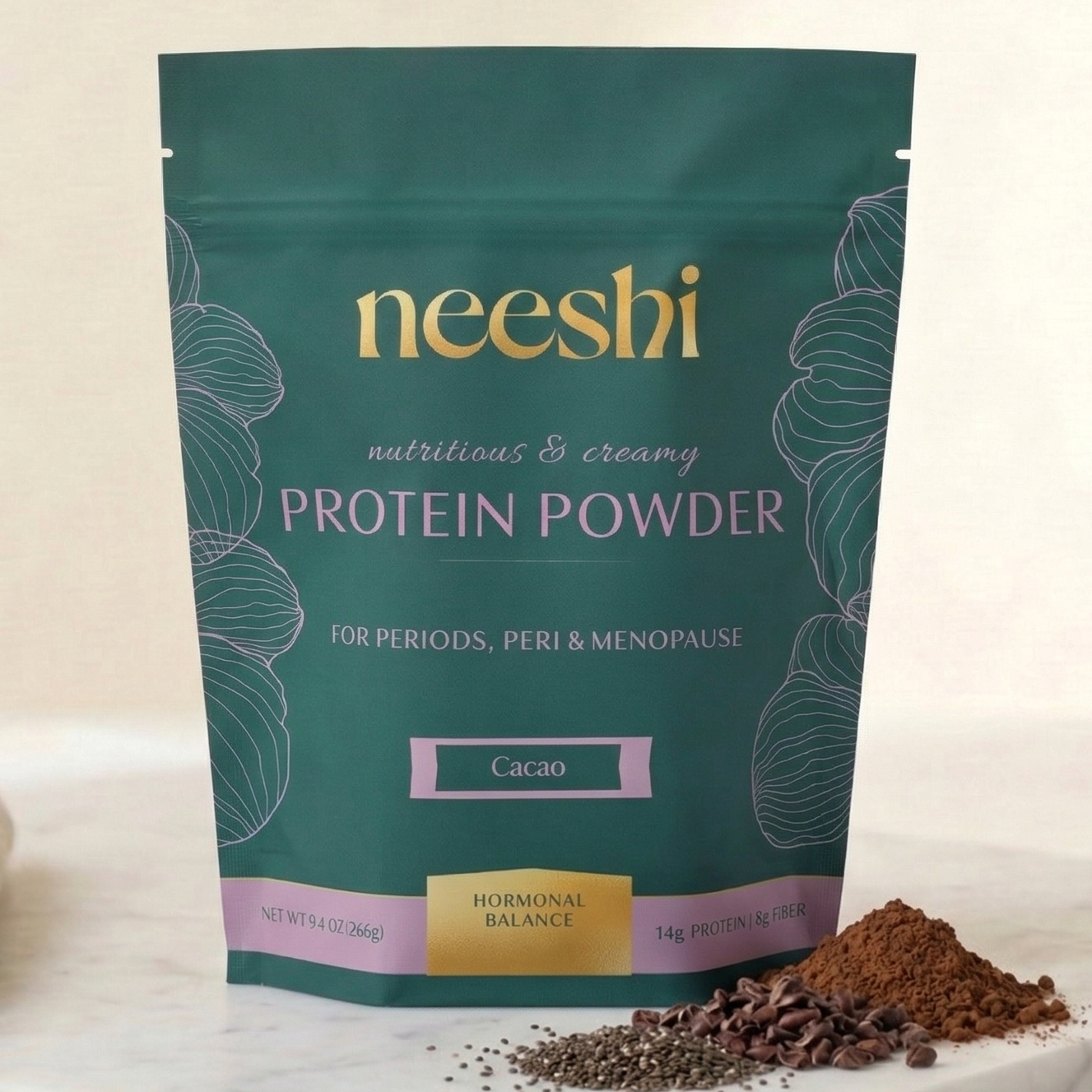
Neeshi Nourishing Protein & Fiber Blend
Flaxseed + chia seeds — soluble fiber that keeps digestion moving and supports estrogen clearance to reduce hormonal bloating. Plant-based protein that won't cause the digestive heaviness of whey. Customers report less bloating within weeks. FSA/HSA eligible.
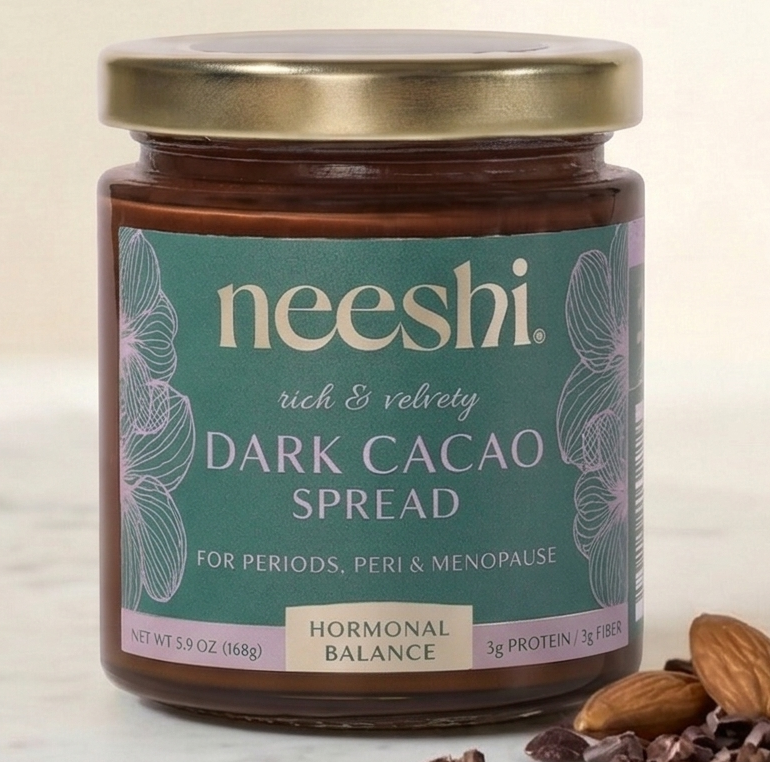
Neeshi Dark Cacao Spread
Magnesium from cacao and pumpkin seeds helps relax smooth gut muscle and supports fluid balance. Anti-inflammatory ingredients reduce the GI inflammation that worsens bloating. One tablespoon daily, every day.
Frequently Asked Questions
Why do I bloat before my period?
Progesterone slows gut motility, estrogen drives water retention, prostaglandins cause GI inflammation, and reduced serotonin further slows digestion. These hormonal effects combine to cause the bloating, puffiness, and discomfort that peaks in the week before your period. It usually resolves once your period begins.
How does fiber help with PMS bloating?
Fiber keeps digestion moving against the slowing effect of progesterone, and soluble fiber (especially from flaxseed and chia) binds to excess estrogen in the gut to help excrete it — reducing the hormonal water retention that causes bloating. It also feeds beneficial gut bacteria that reduce gas production and support digestive health.
Does magnesium help with PMS bloating?
Yes — magnesium relaxes smooth muscle throughout the body, including the gut, reducing cramping and gas retention. It also helps regulate fluid balance, counteracting some of the water retention. Magnesium deficiency is common in women with significant PMS symptoms. Dark cacao and pumpkin seeds are excellent food sources.
Is period bloating the same as IBS bloating?
They can overlap. Women with IBS often experience significantly worse symptoms before their period because the hormonal changes exaggerate the gut's sensitivity. If bloating is severe, unpredictable, or occurs outside of your cycle, consult a gastroenterologist or gynecologist to evaluate for IBS, SIBO, or endometriosis affecting the bowel.
How quickly can I reduce PMS bloating with diet?
Some dietary changes reduce bloating within the same cycle — particularly eliminating sodium, carbonated drinks, and raw cruciferous vegetables in your luteal phase. Deeper changes to gut microbiome and hormonal regulation from daily fiber and magnesium take 1–3 cycles to show full effect.
These statements have not been evaluated by the Food and Drug Administration. This product is not intended to diagnose, treat, cure, or prevent any disease. Consumer survey data is from 18 women who used Neeshi daily for 3 full menstrual cycles. Results are self-reported and not from a clinical trial.