
Sleep Support During Perimenopause
Night sweats, 3am wake-ups, and lying awake with a racing mind — perimenopausal sleep disruption is one of the most exhausting parts of the transition. Here's how the right foods can help you sleep through the night again.
Why perimenopause disrupts sleep
Perimenopausal sleep disruption has multiple hormonal causes. Progesterone, which normally has a calming, GABA-like effect on the brain, declines during perimenopause — meaning less natural sedation at night. Fluctuating estrogen affects the timing of melatonin production and interferes with REM sleep. Hot flashes and night sweats physically wake you. And stress hormones like cortisol can shift their daily rhythm, peaking too early in the morning (causing 3am wake-ups) instead of staying low until sunrise.
Chronic sleep disruption then worsens every other perimenopause symptom — mood, energy, hot flash sensitivity, and cognitive function. It becomes a cycle.
How food affects perimenopausal sleep
The right nutrients can support each of the mechanisms that disrupt perimenopausal sleep. Magnesium activates GABA receptors and supports melatonin production. Phytoestrogens from flaxseed help moderate the hormonal fluctuations that cause night sweats. Tryptophan-rich foods support serotonin and melatonin. Blood sugar stability through the night reduces cortisol spikes that cause early morning waking.
Best foods for perimenopausal sleep
- Dark cacao — rich in magnesium, which activates GABA receptors and supports melatonin production; also reduces cortisol
- Pumpkin seeds — high in magnesium and tryptophan (serotonin/melatonin precursor)
- Flaxseed — lignans reduce night sweat frequency by moderating estrogen fluctuations
- Almonds — magnesium and tryptophan; slow-release healthy fats stabilize blood sugar through the night
- Tart cherries (or tart cherry juice) — one of the few foods with natural melatonin; studied for improved sleep duration in adults
- Kiwi — contains serotonin and antioxidants; a small sleep study showed improvement in sleep onset and duration
- Chamomile tea — contains apigenin, which binds to GABA receptors and has a mild sedating effect
- Oats with banana — complex carbs and B6 support serotonin production and help tryptophan cross into the brain
Blood sugar and 3am wake-ups: If you tend to wake between 2–4am, low blood sugar may be activating a cortisol response to bring glucose back up. Try having a small protein and fat snack before bed (a small handful of almonds or a tablespoon of Neeshi spread) to help stabilize blood sugar through the night.
What to avoid for better perimenopausal sleep
- Alcohol — the most damaging sleep disruptor: suppresses REM, causes night sweats, and fragments sleep in the second half of the night
- Caffeine after 2pm — delays melatonin production and keeps cortisol elevated into the evening
- Refined sugar and large meals within 2 hours of bed — blood sugar spikes and crashes disrupt sleep architecture and can trigger 3am cortisol spikes
- Spicy food at dinner — can trigger or worsen night sweats during sleep
- High-sodium meals — discomfort and bloating disrupt sleep quality
Evening routine for better sleep during perimenopause
Pairing dietary support with sleep hygiene has the strongest effect. Keep your bedroom cool (65–68°F) to reduce night sweat severity. Finish screens and bright light 30–60 minutes before bed. If 3am waking is a pattern, a small protein snack before bed can help stabilize blood sugar. A consistent wind-down routine matters, because the hormonal chaos of perimenopause means your body needs stronger cues that it's time to sleep.
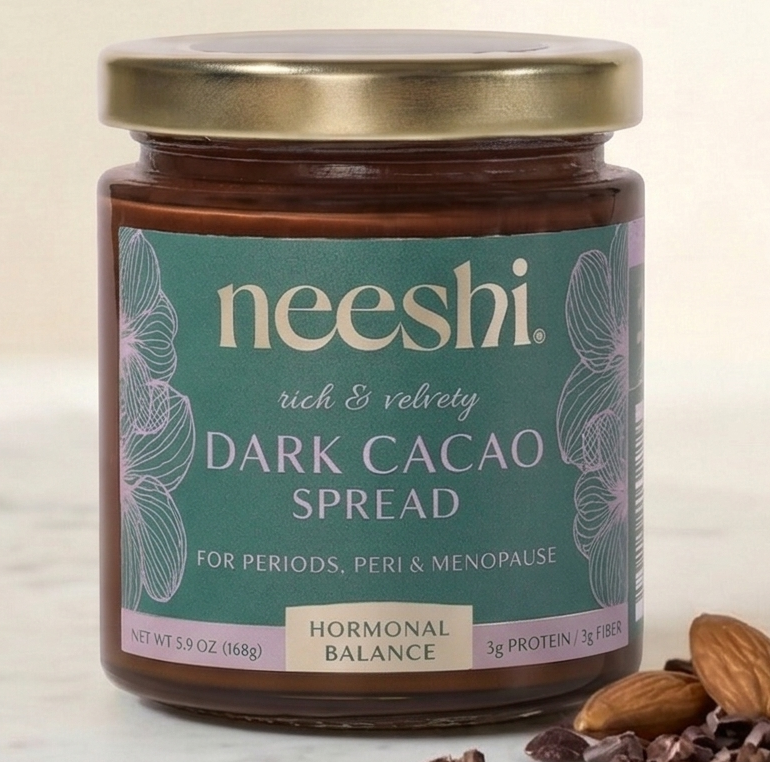
Neeshi Dark Cacao Spread
Magnesium from cacao and pumpkin seeds, flaxseed to reduce night sweats — daily nutritional support for perimenopausal sleep. 9 in 10 women in consumer survey reported improved sleep after 3 cycles. One tablespoon daily. FSA/HSA eligible.
Frequently Asked Questions
Why do I wake up at 3am during perimenopause?
The most common causes are night sweats (hot flashes during sleep), a cortisol spike (cortisol rises too early when hormones are dysregulated), low blood sugar, or anxiety from reduced progesterone (which has calming effects). Stabilizing blood sugar, reducing night sweat triggers, and building magnesium reserves all help reduce early morning waking.
Does magnesium help with sleep during perimenopause?
Yes — magnesium activates GABA receptors (the brain's primary relaxation system), supports melatonin production, and reduces cortisol. Multiple studies show magnesium supplementation improves sleep quality, onset time, and reduces nighttime awakening. Dark cacao and pumpkin seeds are among the richest food sources.
Can food really reduce night sweats?
Yes, over time. Reducing dietary hot flash triggers (alcohol, spicy food, refined sugar) and increasing phytoestrogen-rich foods (especially flaxseed) can meaningfully reduce night sweat frequency and intensity. It takes 6–12 weeks of consistent dietary changes to see full effect. In Neeshi's consumer survey, 9 in 10 women reported improved sleep including fewer night sweats after 3 cycles of daily use.
Should I take melatonin for perimenopausal sleep?
Melatonin can help with sleep onset during perimenopause, particularly if your circadian rhythm has shifted. However, the dose matters — most research supports 0.5–1mg rather than the 5–10mg found in most commercial products. Dietary melatonin from tart cherries and magnesium support from food can also help and have no tolerance concerns. Consult your doctor about whether melatonin is appropriate for your situation.
Is poor sleep during perimenopause permanent?
No. Most women find sleep improves as they move through menopause and hormones stabilize. In the meantime, dietary support, sleep hygiene, and (for some women) hormone therapy can significantly improve sleep quality. Don't accept disrupted sleep as inevitable — there are effective approaches.
These statements have not been evaluated by the Food and Drug Administration. This product is not intended to diagnose, treat, cure, or prevent any disease. Consumer survey data is from 18 women who used Neeshi daily for 3 full menstrual cycles. Results are self-reported and not from a clinical trial. If sleep disruption is severely affecting your quality of life, consult a healthcare provider.